urday
1
Saturday
Saturday
Saturday
1
Friday
Friday
Cultivation & Usage Details
Fodder Bajra of this variety (Rajka/Multi-cut) typically follows these agricultural patterns:
Multi-Cut Capability: Unlike grain bajra, this variety is developed for multiple harvests. The first cut is usually ready in 40–45 days, with subsequent cuts every 25–30 days.
Sowing Season: Primarily sown during the Summer (March to April) and Kharif (June to July) seasons.
Nutritional Value: High in protein and palatability for cattle, helping in better milk production.
Sowing Method: Usually sown by drilling or broadcasting.
Row Spacing: 25–30 cm.
Seed Rate: Approximately 8–10 kg per acre for fodder purposes.
Maturity: Usually a short-duration crop (60–75 days).
Resistance: Often bred for resistance to Yellow Mosaic Virus (YMV), which is a common threat to green gram.
Grain Quality: High-luster, bold green seeds that are preferred in the market.
Sowing Season: Typically sown during the Kharif (monsoon) or Zaid (summer) seasons.
Storage: Keep in a cool, dry place away from direct sunlight to maintain the germination rate.
General Characteristics of Fodder Bajra
While specific technical data isn't on the front, Fodder Bajra (Pearl Millet) typically offers:
Multi-cut Capability: Many fodder varieties allow for multiple harvests (cuts) throughout the season.
Drought Tolerance: Bajra is known for being hardy and performing well even in areas with limited water.
Nutritional Value: It is generally high in protein and energy, making it an excellent green forage for cattle and buffaloes.
Key Characteristics (Typical of this Hybrid)
While specific field performance can vary by season, the AKIRA 55 variety is generally known for:
Fruit Appearance: Dark green, attractive, and tender pods.
Plant Habit: Vigorous growth with short internodal distance (meaning more pods per plant).
Disease Resistance: This "Research Hybrid" is typically bred for high tolerance to Yellow Vein Mosaic Virus (YVMV) and Enation Leaf Curl Virus (ELCV), which are the biggest threats to okra crops.
Harvesting: Usually ready for the first picking within 45 to 50 days after sowing.
Key Features & Certifications
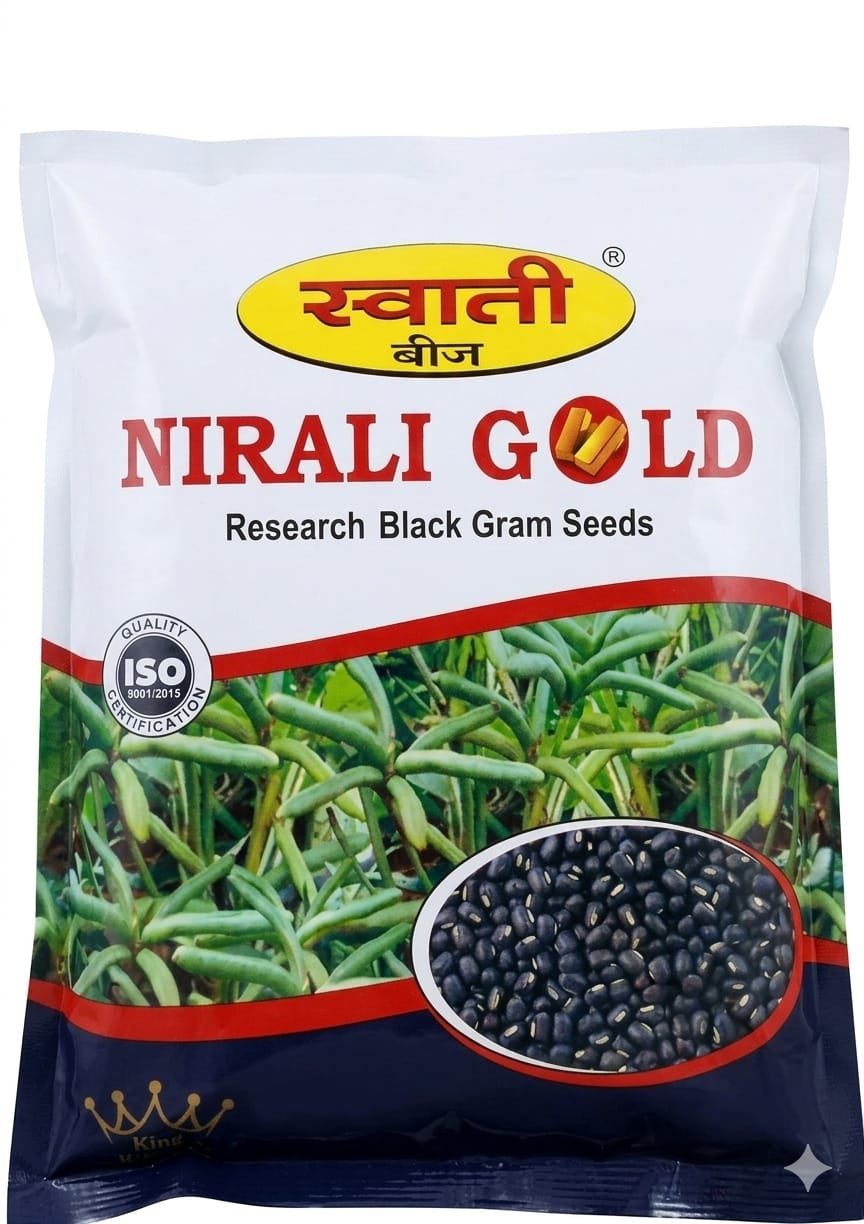
Quality Standard: The packaging displays an ISO 9001:2015 Quality Certification seal, indicating the manufacturing process meets international quality management standards.
Classification: Labeled as "Research" seeds, which typically implies they have been developed through selective breeding for specific traits like higher yield or disease resistance.
Visual Indicators:
Pod Appearance: The image shows clusters of long, green, slightly hairy pods.
Seed Appearance: The resulting seeds are small, oval, and black with a distinct white hilum (the "eye" of the bean).
Usage and Cultivation Tips
Black gram is a staple pulse in many regions, valued for its high protein content. If you are planning to plant these, keep the following in mind:
Climate: It is a warm-season crop that thrives in tropical and subtropical climates.
Soil: It prefers well-drained loamy soil with a neutral pH.
Growth Habit: It is generally a short-duration crop (usually 70–90 days from sowing to harvest).
170
450